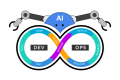
DevSecOps with AI: Automating Security in the Pipeline Training Course
DevSecOps with AI involves integrating artificial intelligence into DevOps workflows to proactively identify vulnerabilities, enforce security policies, and automate response actions throughout the software delivery lifecycle.
This instructor-led, live training (available online or onsite) is designed for intermediate-level DevOps and security professionals looking to leverage AI-based tools and practices to enhance security automation across development and deployment pipelines.
Upon completing this training, participants will be able to:
- Integrate AI-driven security tools into CI/CD pipelines.
- Employ AI-powered static and dynamic analysis to identify issues at an earlier stage.
- Automate the detection of secrets, scanning of code vulnerabilities, and analysis of dependency risks.
- Enable proactive threat modeling and policy enforcement using intelligent techniques.
Format of the Course
- Interactive lecture and discussion.
- Extensive exercises and practice.
- Hands-on implementation in a live-lab environment.
Course Customization Options
- To request a customized training for this course, please contact us to arrange.
Course Outline
Introduction to DevSecOps and AI Integration
- DevSecOps principles and goals
- The role of AI and ML in DevSecOps
- Security automation trends and tool categories
Static and Dynamic Code Analysis with AI
- Using SonarQube, Semgrep, or Snyk Code for static analysis
- Dynamic testing with AI-assisted test case generation
- Interpreting results and integrating with version control systems
Secrets and Credential Leak Detection
- AI-enhanced detection of hardcoded secrets (e.g., GitHub Advanced Security, Gitleaks)
- Preventing secrets from entering source control
- Creating automatic blocking and alerting rules
AI-Powered Dependency and Container Scanning
- Scanning containers with Trivy and AI-enabled plugins
- Monitoring third-party libraries and SBOMs
- Automated remediation recommendations and patch alerts
Intelligent Threat Modeling and Risk Assessment
- Automated threat modeling with AI-based tools
- Risk prioritization using machine learning models
- Linking business impact to technical vulnerabilities
CI/CD Pipeline Integration and Automation
- Embedding security checks in Jenkins, GitHub Actions, or GitLab CI
- Creating policies-as-code to enforce rules across environments
- Generating AI-assisted reports for audits and compliance
Case Studies and Security Automation Patterns
- Real-world examples of AI in security pipelines
- Choosing the right tools for your ecosystem
- Best practices for building and maintaining secure pipelines
Summary and Next Steps
Requirements
- An understanding of the DevOps lifecycle and CI/CD pipelines
- Basic knowledge of application security principles
- Familiarity with code repositories and infrastructure-as-code tools
Audience
- Security-focused DevOps teams
- DevSecOps engineers and cloud security specialists
- Compliance and risk management professionals
Need help picking the right course?
southafrica@nobleprog.co.za or +27 (0)10 005 5793
DevSecOps with AI: Automating Security in the Pipeline Training Course - Enquiry
Related Courses
AI-Driven Deployment Orchestration & Auto-Rollback
14 HoursAI-driven deployment orchestration leverages machine learning and automation to guide rollout strategies, detect anomalies, and trigger automatic rollback when needed.
This instructor-led, live training (online or onsite) is aimed at intermediate-level professionals who wish to optimize deployment pipelines with AI-powered decision-making and resilience capabilities.
Upon completion of this training, participants will be able to:
- Implement AI-assisted rollout strategies for safer deployments.
- Predict deployment risk using machine learning–driven insights.
- Integrate automated rollback workflows based on anomaly detection.
- Enhance observability to support intelligent orchestration.
Format of the Course
- Instructor-led demonstrations with technical deep dives.
- Hands-on scenarios focused on deployment experimentation.
- Practical labs simulating real-world orchestration challenges.
Course Customization Options
- Customized integrations, toolchain support, or workflow alignment can be arranged upon request.
AI for DevOps: Integrating Intelligence into CI/CD Pipelines
14 HoursAI for DevOps refers to the use of artificial intelligence to improve continuous integration, testing, deployment, and delivery processes through intelligent automation and optimization methods.
This instructor-led live training, available online or onsite, is designed for DevOps professionals at an intermediate level who want to integrate AI and machine learning into their CI/CD pipelines to enhance speed, accuracy, and quality.
By the end of this training, participants will be able to:
- Integrate AI tools into CI/CD workflows for intelligent automation.
- Apply AI-based testing, code analysis, and change impact detection.
- Optimize build and deployment strategies using predictive insights.
- Implement traceability and continuous improvement using AI-enhanced feedback loops.
Format of the Course
- Interactive lecture and discussion.
- Lots of exercises and practice.
- Hands-on implementation in a live-lab environment.
Course Customization Options
- To request a customized training for this course, please contact us to arrange.
AI for Feature Flag & Canary Testing Strategy
14 HoursAI-driven rollout control leverages machine learning, pattern analysis, and adaptive decision models to optimize feature flag operations and canary testing workflows.
This instructor-led live training (available online or onsite) targets intermediate-level engineers and technical leads seeking to enhance release reliability and refine feature exposure decisions through AI-driven analysis.
Upon completing this course, participants will be able to:
- Utilize AI-based decision models to evaluate the risk associated with exposing new features.
- Automate canary analysis by leveraging performance, behavioral, and operational indicators.
- Incorporate intelligent scoring mechanisms into feature flag platforms.
- Design rollout strategies that dynamically adapt based on real-time data insights.
Course Format
- Guided discussions enriched with real-world scenarios.
- Hands-on exercises focused on AI-enhanced rollout strategies.
- Practical implementation within a simulated feature flag and canary environment.
Customization Options
- For tailored content or integration with organization-specific tools, please reach out to us.
AIOps in Action: Incident Prediction and Root Cause Automation
14 HoursAIOps (Artificial Intelligence for IT Operations) is increasingly being used to predict incidents before they occur and automate root cause analysis (RCA) to minimize downtime and accelerate resolution.
This instructor-led, live training (online or onsite) is aimed at advanced-level IT professionals who wish to implement predictive analytics, automate remediation, and design intelligent RCA workflows using AIOps tools and machine learning models.
By the end of this training, participants will be able to:
- Build and train ML models to detect patterns leading to system failures.
- Automate RCA workflows based on multi-source log and metric correlation.
- Integrate alerting and remediation processes into existing platforms.
- Deploy and scale intelligent AIOps pipelines in production environments.
Format of the Course
- Interactive lecture and discussion.
- Lots of exercises and practice.
- Hands-on implementation in a live-lab environment.
Course Customization Options
- To request a customized training for this course, please contact us to arrange.
AIOps Fundamentals: Monitoring, Correlation, and Intelligent Alerting
14 HoursAIOps (Artificial Intelligence for IT Operations) represents a methodology that leverages machine learning and advanced analytics to automate and enhance IT operations, with a specific focus on monitoring, incident detection, and response capabilities.
This instructor-led live training, available either online or onsite, is designed for intermediate-level IT operations professionals aiming to apply AIOps techniques. Participants will learn to correlate metrics and logs, minimize alert noise, and enhance observability through intelligent automation.
Upon completing this training, participants will be equipped to:
- Grasp the core principles and architectural framework of AIOps platforms.
- Correlate data from logs, metrics, and traces to pinpoint root causes.
- Alleviate alert fatigue by implementing intelligent filtering and noise suppression strategies.
- Utilize open-source or commercial tools to automatically monitor and respond to incidents.
Course Format
- Engaging interactive lectures and discussions.
- Extensive exercises and practical application.
- Hands-on implementation within a live laboratory environment.
Customization Options
- For personalized training arrangements, please reach out to us to discuss your specific requirements.
Building an AIOps Pipeline with Open Source Tools
14 HoursLeveraging entirely open-source tools to build an AIOps pipeline empowers teams to create flexible and cost-efficient solutions for monitoring, detecting anomalies, and managing intelligent alerts within production environments.
This instructor-led live training, available either online or on-site, is designed for advanced engineers looking to architect and deploy a comprehensive AIOps pipeline utilizing tools such as Prometheus, ELK, Grafana, and custom machine learning models.
Upon completion of this training, participants will be equipped to:
- Design an AIOps architecture relying exclusively on open-source components.
- Gather and standardize data from logs, metrics, and traces.
- Implement machine learning models to identify anomalies and forecast incidents.
- Automate alerting and remediation processes using open tooling.
Course Format
- Interactive lectures and group discussions.
- Extensive exercises and practical application.
- Hands-on implementation within a live-lab environment.
Customization Options
- To request tailored training for this course, please get in touch to make arrangements.
AI-Powered Test Generation and Coverage Prediction
14 HoursAI-driven test generation encompasses a range of techniques and tools that utilize machine learning to automate the creation of test cases and predict areas where testing coverage may be lacking.
This instructor-led live training (available online or onsite) is designed for advanced professionals who want to apply AI techniques to automatically generate tests and identify regions with insufficient coverage.
Upon completing this workshop, participants will be equipped to:
- Utilize AI models to create effective unit, integration, and end-to-end test scenarios.
- Analyze codebases using machine learning to uncover potential coverage blind spots.
- Integrate AI-based test generation into CI/CD workflows.
- Optimize test strategies using predictive failure analytics.
Format of the Course
- Guided technical lectures supported by expert insights.
- Scenario-based practice sessions and hands-on exercises.
- Applied experimentation within a controlled testing environment.
Course Customization Options
- If you need this training tailored to your specific toolchain or workflows, please contact us to arrange.
AI-Powered QA Automation in CI/CD
14 HoursAI-powered QA automation elevates traditional testing methodologies by creating intelligent test cases, enhancing regression coverage, and embedding smart quality checkpoints into CI/CD pipelines to ensure scalable and dependable software delivery.
This instructor-led, live training (available online or onsite) is designed for intermediate-level QA and DevOps professionals seeking to leverage AI tools to automate and expand quality assurance within continuous integration and deployment workflows.
Upon completing this training, participants will be able to:
- Create, prioritize, and sustain tests using AI-driven automation platforms.
- Embed intelligent QA checkpoints into CI/CD pipelines to mitigate regression risks.
- Utilize AI for exploratory testing, predicting defects, and analysing test instability.
- Enhance testing efficiency and coverage across rapidly evolving agile projects.
Course Format
- Interactive lectures and group discussions.
- Numerous exercises and practical sessions.
- Practical implementation within a live laboratory environment.
Customization Options
- To arrange a bespoke training session for this course, please get in touch with us.
Continuous Compliance with AI: Governance in CI/CD
14 HoursAI-driven compliance monitoring is a field that leverages intelligent automation to identify, enforce, and verify policy requirements throughout the software delivery lifecycle.
This instructor-led, live training (available online or on-site) is designed for intermediate-level professionals looking to embed AI-powered compliance controls into their CI/CD pipelines.
Upon completion of this training, participants will be able to:
- Implement AI-based checks to uncover compliance gaps during the software build process.
- Utilize intelligent policy engines to enforce regulatory, security, and licensing standards.
- Automatically detect configuration drift and deviations.
- Integrate real-time compliance reporting into delivery workflows.
Course Format
- Instructor-led presentations complemented by practical examples.
- Practical exercises focused on real-world CI/CD compliance scenarios.
- Hands-on experimentation within a controlled DevSecOps lab environment.
Customization Options
- If your organization needs tailored compliance integrations, please contact us to make arrangements.
CI/CD for AI: Automating Docker-Based Model Builds and Deployments
21 HoursCI/CD for AI represents a structured methodology for automating the packaging, testing, containerization, and deployment of AI models through continuous integration and delivery pipelines.
This instructor-led live training, available online or onsite, targets intermediate-level professionals aiming to streamline end-to-end AI model delivery workflows using Docker and CI/CD platforms.
Upon completion of the training, participants will be capable of:
- Establishing automated pipelines for the construction and testing of AI model containers.
- Ensuring version control and reproducibility throughout the model lifecycle.
- Integrating automated deployment strategies for AI services.
- Applying CI/CD best practices specifically adapted for machine learning operations.
Format of the Course
- Instructor-guided presentations and technical discussions.
- Practical labs and hands-on implementation exercises.
- Realistic CI/CD workflow simulations within a controlled environment.
Course Customization Options
- If your organization requires customized pipeline workflows or platform integrations, please contact us to tailor this course.
GitHub Copilot for DevOps Automation and Productivity
14 HoursGitHub Copilot acts as an AI-driven coding assistant designed to automate various development tasks, including DevOps operations such as crafting YAML configurations, GitHub Actions, and deployment scripts.
This live training, led by an instructor and available either online or onsite, targets beginner to intermediate professionals who aim to utilise GitHub Copilot to streamline DevOps tasks, enhance automation, and boost productivity.
Upon completing this training, participants will be able to:
- Employ GitHub Copilot to assist with shell scripting, configuration management, and CI/CD pipelines.
- Utilise AI-powered code completion within YAML files and GitHub Actions.
- Speed up testing, deployment, and automation workflows.
- Apply Copilot responsibly, gaining a clear understanding of AI limitations and best practices.
Format of the Course
- Interactive lectures and discussions.
- Extensive exercises and practice sessions.
- Hands-on implementation within a live-lab environment.
Course Customization Options
- To request tailored training for this course, please contact us to make arrangements.
Enterprise AIOps with Splunk, Moogsoft, and Dynatrace
14 HoursEnterprise AIOps platforms such as Splunk, Moogsoft, and Dynatrace offer robust capabilities for identifying anomalies, correlating alerts, and automating responses across extensive IT environments.
This instructor-led live training, available either online or onsite, is designed for intermediate-level enterprise IT teams looking to incorporate AIOps tools into their current observability stack and operational workflows.
Upon completing this training, participants will be able to:
- Set up and integrate Splunk, Moogsoft, and Dynatrace into a cohesive AIOps architecture.
- Correlate metrics, logs, and events across distributed systems using AI-driven analysis.
- Automate incident detection, prioritization, and response through built-in and custom workflows.
- Enhance performance, reduce MTTR, and improve operational efficiency at an enterprise scale.
Course Format
- Interactive lectures and discussions.
- Numerous exercises and practical sessions.
- Hands-on implementation within a live-lab environment.
Customization Options for the Course
- To request customized training for this course, please contact us to arrange details.
Implementing AIOps with Prometheus, Grafana, and ML
14 HoursPrometheus and Grafana are industry-standard tools for ensuring observability within modern infrastructure. By incorporating machine learning, these platforms gain the ability to deliver predictive and intelligent insights, thereby automating key operational decisions.
This instructor-led live training, available either online or onsite, targets observability professionals at an intermediate level. Its objective is to help participants modernize their monitoring infrastructure by adopting AIOps practices through the integration of Prometheus, Grafana, and machine learning techniques.
Upon completion of this training, participants will be equipped to:
- Configure Prometheus and Grafana to establish robust observability across various systems and services.
- Collect, store, and visualize high-quality time series data effectively.
- Deploy machine learning models to facilitate anomaly detection and forecasting.
- Develop intelligent alerting rules driven by predictive insights.
Course Format
- Interactive lectures and discussions.
- Extensive exercises and practical applications.
- Hands-on implementation within a live laboratory environment.
Course Customization Options
- For inquiries regarding customized training for this course, please reach out to us to make arrangements.
LLMs and Agents in DevOps Workflows
14 HoursLarge Language Models (LLMs) and autonomous agent frameworks such as AutoGen and CrewAI are transforming how DevOps teams automate tasks like change tracking, test generation, and alert triage by simulating human-like collaboration and decision-making.
This instructor-led, live training (available online or onsite) is designed for advanced-level engineers who wish to design and implement DevOps automation workflows powered by large language models (LLMs) and multi-agent systems.
By the end of this training, participants will be able to:
- Integrate LLM-based agents into CI/CD workflows for smart automation.
- Automate test generation, commit analysis, and change summaries using agents.
- Coordinate multiple agents for triaging alerts, generating responses, and providing DevOps recommendations.
- Build secure and maintainable agent-powered workflows using open-source frameworks.
Format of the Course
- Interactive lecture and discussion.
- Extensive exercises and practice.
- Hands-on implementation in a live-lab environment.
Course Customization Options
- To request a customized training for this course, please contact us to arrange.
Predictive Build Optimization with Machine Learning
14 HoursPredictive build optimization involves leveraging machine learning to analyze build behaviors, thereby enhancing reliability, speed, and resource efficiency.
This instructor-led live training, available online or onsite, is designed for intermediate-level engineering professionals seeking to enhance their build pipelines through automation, predictive analytics, and intelligent caching techniques.
Upon completion of this course, participants will be equipped to:
- Apply machine learning techniques to evaluate build performance patterns.
- Identify and anticipate build failures by analyzing historical build logs.
- Implement machine learning-driven caching strategies to minimize build durations.
- Incorporate predictive analytics into existing CI/CD workflows.
Course Format
- Instructor-guided lectures coupled with collaborative discussions.
- Practical exercises centered on analyzing and modeling build data.
- Hands-on implementation within a simulated CI/CD environment.
Customization Options
- To tailor this training to specific toolchains or environments, please reach out to us for a customized program.